
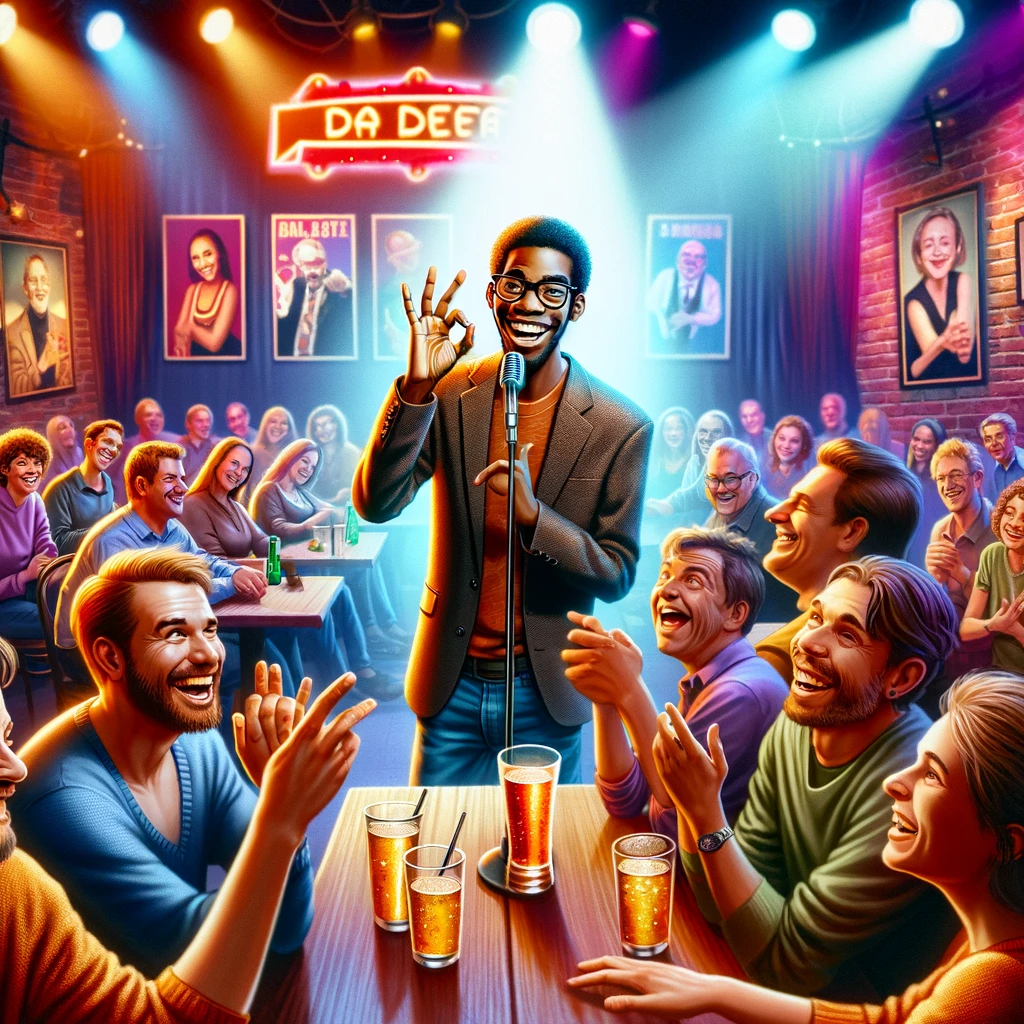
Humor is a universal language, transcending boundaries and bringing people together. In the Deaf community, humor plays a significant role, not only as a source of entertainment but also as a powerful tool for social connection, cultural expression, and resilience. Deaf comedy clubs and events are spaces where individuals can share their experiences and perspectives, using humor to both educate and entertain.
The Role of Humor in the Deaf Community
For many in the Deaf community, humor is a way to navigate and cope with the challenges posed by a predominantly hearing world. Jokes and funny stories often revolve around miscommunications or the amusing mishaps that can occur when navigating life without hearing. This shared laughter helps to strengthen community bonds and provides a sense of belonging.
Deaf humor often involves a level of creativity and visual wit that is distinct. Since American Sign Language (ASL) and other sign languages are highly visual, Deaf comedians use facial expressions, body language, and sign-play to create puns and jokes that might not have direct equivalents in spoken language. This can include playing on the shapes or movements of signs or creating visual puns that are uniquely accessible to those fluent in sign language.
The Rise of Deaf Comedy Clubs
Deaf comedy clubs have begun to gain popularity as spaces where the Deaf community can gather to share their humorous insights without barriers. These clubs often feature performances by Deaf comedians who tell stories and jokes from their personal experiences, highlighting the humor in misunderstandings with hearing people, technology fails, and everyday life from a Deaf perspective.
These venues are not just about laughter; they also serve as important cultural hubs for the Deaf community. They provide a platform for emerging talent and support the professional growth of Deaf entertainers. Moreover, they raise awareness among hearing audiences about Deaf culture and communication, bridging gaps and fostering a greater understanding of Deaf experiences.
Mainstream Recognition and Challenges
While Deaf comedy and entertainment have seen increased visibility, mainstream recognition remains a challenge. Many Deaf comedians struggle to find platforms that are accessible and willing to accommodate their unique style of performance. Captioning, sign language interpretation, and other accessibility measures are essential to integrate Deaf performers into mainstream comedy venues.
However, the landscape is changing. With the advent of social media and online video platforms, Deaf comedians have found new avenues to reach broader audiences. Videos featuring ASL comedy can go viral, reaching millions of viewers worldwide and showcasing the rich humor that the Deaf community has to offer.
Educational and Social Impact
Deaf comedy clubs also play an educational role. They are venues where hearing people can learn about Deaf culture in an engaging and relaxed environment. Through humor, audiences can explore aspects of Deaf life, communication strategies, and the community’s values and norms. This not only entertains but also educates and sensitizes hearing individuals to the experiences of their Deaf peers.
Moreover, these clubs promote social inclusion by providing a space where Deaf and hearing people can mingle and share experiences. The interactive nature of comedy, with its immediate feedback loop of laughter and applause, creates a dynamic environment where barriers can be broken down and mutual understanding can flourish.
Deaf comedy clubs are more than just entertainment venues; they are vibrant cultural spaces that celebrate the richness of Deaf culture through humor. By sharing funny stories and jokes, these clubs highlight the unique perspectives of the Deaf community, foster inclusivity, and challenge societal norms. As they continue to grow in popularity, they not only provide a platform for Deaf comedians to shine but also enhance our understanding and appreciation of the diversity within our communities.

The Significance of Visual Humor
In Deaf comedy, the reliance on visual humor sets it apart from traditional spoken comedy. Visual jokes, which often exploit the features of sign language and non-verbal communication, can offer a nuanced type of humor that hearing audiences might not have previously experienced. These jokes often require no translation, as the humor is universal once the context is understood. For example, a common theme might be the literal interpretations of idiomatic expressions, which when acted out in sign language, result in hilarious visuals.
Celebrating Deaf Culture Through Comedy
Deaf comedy often goes beyond mere entertainment to celebrate and criticize the norms within Deaf culture itself. Comedians may poke fun at Deaf social norms, communication faux pas, and even the politics of Deafness. This self-referential humor not only amuses but also serves to foster a critical awareness of Deaf culture among both Deaf and hearing audiences. It’s a way of showing that Deaf individuals can laugh at themselves while also proudly affirming their identity.
Deaf Comedy in Digital Media
The internet has significantly altered the landscape for Deaf comedians. Platforms like YouTube, TikTok, and Instagram have enabled Deaf creators to bypass traditional gatekeepers in the entertainment industry and connect directly with global audiences. These digital platforms also allow for creative expressions of Deaf humor that might not be feasible in live settings, such as edited videos that highlight the visual-spatial aspects of ASL or create split-screen collaborations between Deaf creators.
Many Deaf comedians also use these platforms to challenge stereotypes about Deafness. By showcasing their humor, they confront and often debunk the misconception that Deaf people live somber, silent lives. Instead, they portray a community vibrant with laughter, creativity, and expression.
Inclusivity in Comedy
One of the ongoing goals within the Deaf comedy scene is to foster inclusivity. This means not only providing spaces where Deaf individuals can perform and enjoy comedy but also ensuring that these spaces are welcoming to individuals from all backgrounds within the Deaf community, including those who use different sign languages or come from different cultural backgrounds.
Moreover, efforts are being made to ensure that Deaf comedy is inclusive of hearing audiences. This inclusivity helps to dismantle the barriers that often exist between the Deaf and hearing worlds. By using humor to share experiences and insights, Deaf comedians play an integral role in educating the broader public about Deaf culture and the realities of living in a predominantly hearing world.
The Future of Deaf Comedy
As Deaf comedy continues to evolve, its impact is likely to expand. With increasing technological advancements and greater societal awareness, the opportunities for Deaf comedians to share their work and influence mainstream media are growing. This progression not only benefits the comedians but also enriches the cultural landscape for all audiences.
Deaf comedy clubs, digital platforms, and inclusive events are critical in this growth. They not only provide venues for expression but also foster an environment where laughter and understanding go hand in hand. As more people engage with Deaf comedy, the nuanced perspectives offered by these comedians can lead to a deeper, more nuanced understanding of Deaf culture and communication.
Conclusion
Deaf comedy clubs represent a significant and dynamic aspect of Deaf culture. They are not merely entertainment venues; they are places where the Deaf community can assert its identity, challenge perceptions, promote inclusivity, and engage with a wider audience. Through humor, these clubs facilitate a better understanding of the Deaf world, enriching the cultural tapestry of our society. As Deaf comedy continues to grow, it promises to bring more laughter and learning to audiences around the world, bridging gaps and building connections through the universal power of humor.