
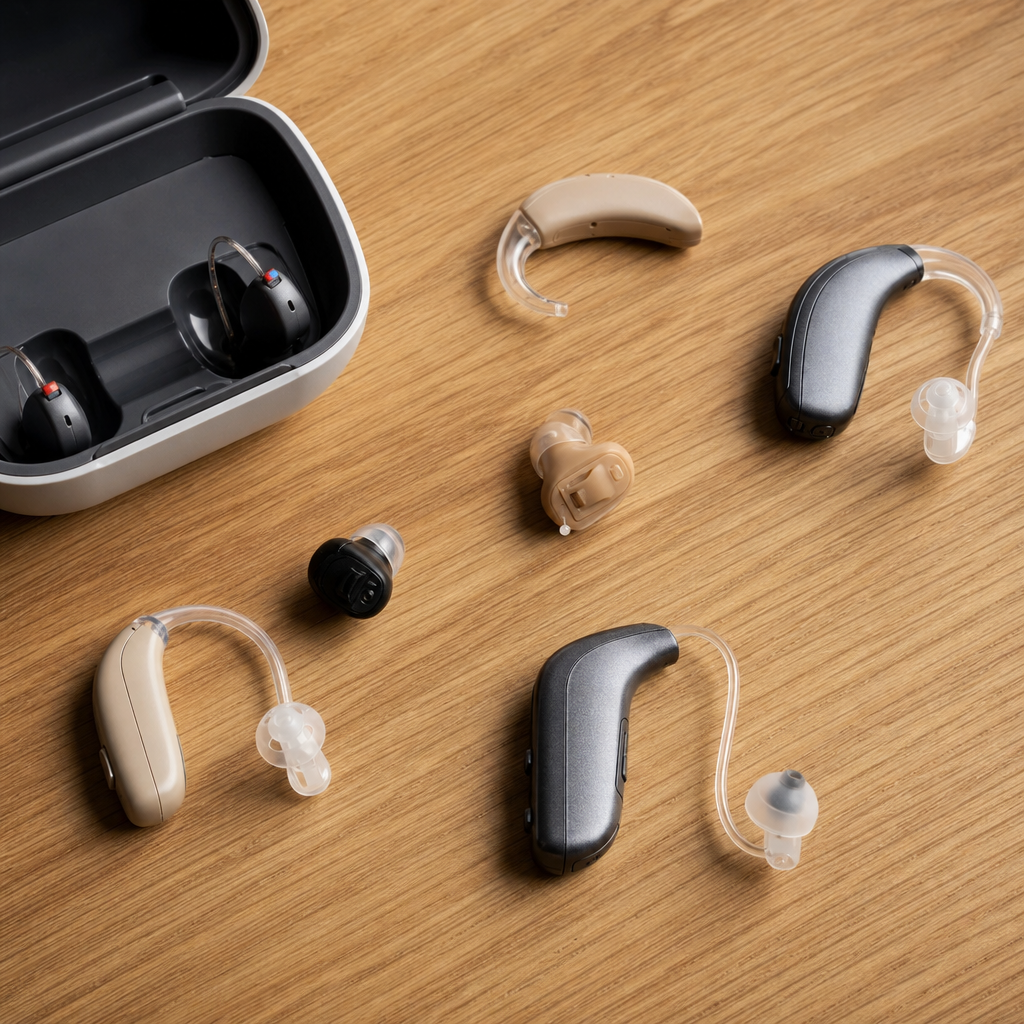
Hearing aids are small medical devices, but choosing among the different kinds of hearing aids is a major health decision that affects communication, safety, work performance, and long-term cognitive engagement. A hearing aid amplifies and processes sound to match a person’s hearing loss pattern, while modern models also reduce noise, manage feedback, connect to phones, and adapt automatically to changing environments. In practice, “kinds of hearing aids” can mean two different things: physical style, such as behind-the-ear or in-the-ear designs, and technology level, such as basic amplification versus advanced signal processing with directional microphones and wireless streaming. Both matter, because the best hearing aid is not simply the smallest or most expensive option; it is the one that fits the user’s hearing test, ear anatomy, dexterity, listening goals, and budget.
I have helped patients compare devices in clinics and retail hearing settings, and the same confusion comes up repeatedly. People ask whether invisible hearing aids work as well as larger models, whether rechargeable batteries are reliable, whether one ear is enough, and whether over-the-counter devices can replace a professionally fitted prescription hearing aid. These are reasonable questions, because hearing aids sit at the intersection of audiology, consumer electronics, and daily habit. Selection is also tied to measurable standards. Audiologists use pure-tone thresholds, speech recognition testing, real-ear verification, and validated questionnaires such as the Hearing Handicap Inventory to judge benefit. Manufacturers build features around known acoustic principles, including wide dynamic range compression, directional processing, and frequency lowering for high-frequency loss. Understanding those basics makes every later decision easier.
This guide serves as a general hub for the hearing aids topic by explaining the main styles, the key features that separate them, who each option is best for, and where professional care still matters most. It also clarifies the limits of hearing aids. They improve access to sound, but they do not restore normal hearing, and no single model is right for everyone. People with conductive hearing loss, single-sided deafness, severe dexterity issues, chronic ear drainage, or profound loss may need specialized solutions beyond standard consumer-facing products. By the end, you should know the main kinds of hearing aids, the tradeoffs among them, and the practical questions to ask before buying.
Behind-the-ear, receiver-in-canal, and other common physical styles
The most familiar hearing aid styles are defined by where the electronics sit and how sound reaches the ear canal. Behind-the-ear, or BTE, devices place the main case behind the ear and route sound through tubing to an earmold or slim tube. Receiver-in-canal, often called RIC or RITE, moves the speaker into the ear canal while keeping microphones and processor behind the ear. In-the-ear, or ITE, devices fill part or most of the outer ear bowl. In-the-canal, completely-in-canal, and invisible-in-canal models sit deeper in the ear canal and are chosen mainly for cosmetic discretion. Each style changes battery size, microphone placement, durability, ease of handling, and acoustic power.
BTE and RIC devices dominate current fittings because they balance performance and comfort. A BTE can deliver high output for moderate to profound hearing loss, accommodate telecoils and large rechargeable cells, and use custom earmolds that reduce feedback. RIC devices are popular because they are lighter, often less occluding, and versatile across mild to severe losses with receiver changes. They also separate the receiver from the microphone, which can improve sound quality and reduce internal case vibration. In my experience, first-time users often prefer RIC instruments because their own voice sounds more natural than with a fully occluding custom shell.
Custom in-ear styles still have a strong place. An ITE device is easier to insert than a tiny canal aid and can be a good choice for people who wear glasses or oxygen tubing. Canal devices offer cosmetic advantages and can use the ear’s natural shape to collect sound, but they usually have less room for directional microphones, smaller batteries, and more vulnerability to wax and moisture. Deeply inserted models are rarely ideal for severe loss or for users with arthritis, visual limitations, or narrow ear canals. The smallest hearing aid is often the hardest one to live with consistently, which is why form should never outrank function.
How hearing loss type and severity determine the right hearing aid
The right hearing aid begins with the hearing loss itself. Audiologists classify hearing loss by type and degree. Sensorineural hearing loss, the most common form in adults, results from damage in the inner ear or auditory nerve pathway and is usually permanent. Conductive hearing loss involves reduced sound transmission through the outer or middle ear and may be medically treatable. Mixed hearing loss combines both. Degree is measured in decibels hearing level across frequencies, and the pattern on the audiogram matters as much as the average. Many adults hear low pitches relatively well but miss high-frequency consonants such as s, f, th, and sh, which is why speech sounds muffled even when volume seems adequate.
For mild to moderate high-frequency loss, open-fit RIC devices are often effective because they amplify important speech frequencies while leaving the ear canal more open. For flatter or more severe loss, a more closed dome or custom earmold is usually needed to retain amplified sound and control feedback. Severe to profound losses typically require more powerful BTE systems with custom molds, and some users need super-power models with advanced feedback management. People with chronic drainage or malformed ear canals may be poor candidates for standard in-ear products and may need medical evaluation, bone conduction solutions, or implantable options instead.
Speech understanding also changes expectations. Two people with the same pure-tone thresholds may perform very differently on word recognition tests. If clarity scores are poor, a stronger hearing aid alone will not fully solve speech difficulty, especially in noise. That is why good counseling matters. The goal is to maximize audibility and comfort, then pair hearing aids with communication strategies, remote microphones, captioning, or assistive listening systems when needed. Better hearing comes from the complete plan, not just the device shell.
Core hearing aid features that matter in daily life
Feature lists can look overwhelming, but a few functions make the biggest real-world difference. Directional microphones help users focus on speech coming from in front while reducing noise from other directions. Digital noise reduction analyzes steady background sounds, such as fans or road noise, and decreases their annoyance without erasing speech. Wide dynamic range compression makes soft sounds audible while keeping loud sounds tolerable. Feedback cancellation suppresses whistling caused by amplified sound leaking back to the microphone. Telecoils improve access in looped venues such as theaters, houses of worship, and public counters. Bluetooth or proprietary wireless systems stream phone calls, media, and remote microphone signals directly to the hearing aid.
Automatic environmental classification is one of the biggest quality-of-life upgrades in modern devices. Instead of pressing buttons every time the listening scene changes, the hearing aid detects quiet conversation, speech in noise, music, wind, or car travel and applies an appropriate program. Better models do this with more precision and smoother transitions. Rechargeable batteries are now mainstream and especially helpful for users with dexterity limitations, though disposable zinc-air cells still offer flexibility for travel and easier replacement when charging access is uncertain.
| Feature | What it does | Best for | Main limitation |
|---|---|---|---|
| Directional microphones | Prioritize speech from one direction | Restaurants, meetings, car conversations | Less useful when talkers move around constantly |
| Noise reduction | Lowers steady background sound | Offices, traffic, home appliances | Does not restore normal hearing in loud noise |
| Rechargeable battery | Charges overnight, no small battery changes | Daily convenience, reduced handling | Battery aging and dependence on charger access |
| Telecoil | Receives magnetic loop signals | Public venues with hearing loops | Only works where loop systems exist |
| Bluetooth streaming | Sends calls and media to both ears | Phone use, video, remote microphones | Compatibility and battery drain vary |
Many buyers focus on app controls and overlook verification. Yet the most important “feature” is accurate fitting to prescriptive targets such as NAL-NL2 or DSL, confirmed with real-ear measurement. Without that step, even premium devices may underperform. In clinics where this is done routinely, users generally report faster adaptation and better satisfaction because the hearing aid is tuned to the acoustics of their own ear canal rather than guessed from factory settings alone.
Prescription hearing aids, over-the-counter devices, and personal sound amplifiers
Not every product sold for hearing help is the same. Prescription hearing aids are fitted through a hearing care professional after evaluation and are intended for a broad range of hearing losses. Over-the-counter hearing aids are regulated for adults with perceived mild to moderate hearing loss and can be purchased without a medical exam or fitting requirement. Personal sound amplification products, or PSAPs, are not hearing aids under medical device rules; they are designed for situational sound enhancement, such as birdwatching, not for treating hearing loss. Confusing these categories leads many people to buy the wrong product.
Over-the-counter options can be valuable when hearing loss is mild, the user is comfortable with smartphone-based setup, and there are no red-flag symptoms such as sudden hearing change, ear pain, drainage, or marked asymmetry. Good OTC brands may include self-fitting hearing tests, in-app adjustments, and rechargeability at lower prices than traditional channels. However, OTC devices are not a shortcut around the physics of hearing. They still need careful setup, gradual adaptation, and realistic expectations in noise. They also may not address complex ear canal acoustics, severe loss, or poor speech discrimination.
Prescription hearing aids remain the better route for complicated hearing profiles, pediatric fittings, tinnitus management, custom earmolds, or anyone who values in-person counseling and follow-up. Professional care becomes especially important when the issue may not be simple age-related hearing loss. I have seen patients who assumed they only needed amplification but actually had impacted wax, middle ear pathology, sudden sensorineural loss, or longstanding asymmetry that required medical referral. Devices help, but diagnosis comes first.
How to choose based on comfort, lifestyle, and long-term ownership
Daily success with hearing aids depends as much on fit and routine as on specifications. Comfort starts with the physical coupling to the ear: dome, mold, shell size, venting, and retention. If a device irritates the ear or creates a strong plugged sensation, the user will wear it less, and benefit will drop. Lifestyle is the next filter. Someone who spends all day in one-on-one conversations at home may do well with a simpler setup than a sales manager moving between restaurants, conference calls, airports, and warehouse floors. Moisture exposure from exercise, heat, or humid climates should also influence choice, since higher ingress protection ratings and wax management systems reduce repair risk.
Maintenance is often underestimated. Hearing aids need daily wiping, periodic wax filter changes, microphone cleaning, software updates, and hearing rechecks as hearing changes over time. Rechargeable models are convenient, but users should understand expected battery lifespan, usually several years before noticeable decline. Warranty terms matter, including loss coverage, repair limits, and office visit policies. Cost should be judged as total ownership, not sticker price alone. A lower-priced device with weak support can become more expensive if it performs poorly or sits in a drawer.
Binaural fitting, meaning one device in each ear when both ears have aidable loss, is usually the best choice. Two hearing aids improve localization, listening effort, and speech understanding in many environments. One aid may save money upfront, but it often leaves patients turning their head to catch speech and struggling more in noise. The best next step is a comprehensive hearing evaluation and a hands-on comparison of suitable styles, not a rushed purchase based on appearance alone.
The main kinds of hearing aids differ in style, power, feature set, and support model, but the decision becomes manageable when you organize it around a few fundamentals. First, match the device to the hearing loss, not to marketing claims. Mild high-frequency loss often pairs well with open-fit RIC technology, while severe losses usually need more power and tighter acoustic sealing. Second, prioritize the features that change real listening outcomes, especially directional microphones, feedback control, wireless connectivity when relevant, and accurate programming verified to recognized targets. Third, be honest about handling needs, work demands, cosmetics, and budget, because the best hearing aid is the one you can wear comfortably every day.
It is equally important to know what hearing aids cannot do. They do not cure hearing loss, and they cannot fully overcome poor room acoustics, distance, or multiple competing talkers. Even excellent devices work best when combined with communication strategies, realistic expectations, and regular follow-up. If you are comparing prescription and over-the-counter options, use complexity as your guide: the more severe, asymmetric, medically uncertain, or frustrating the hearing problem, the more valuable professional testing and fitting become. If your needs are straightforward, a well-designed self-fitting option may be reasonable, provided you can return it if performance falls short.
Use this guide as your starting point for the broader hearing aids journey. From here, the smartest move is to schedule a hearing test, review your listening goals, and compare recommended styles side by side. A careful selection process leads to better speech access, less fatigue, and more confidence in daily conversations.
Frequently Asked Questions
What does “kinds of hearing aids” actually mean?
In most articles and conversations, the phrase “kinds of hearing aids” can refer to two different things, and understanding that distinction makes shopping and decision-making much easier. First, it can describe the physical style of the device, such as behind-the-ear (BTE), receiver-in-canal (RIC), in-the-ear (ITE), in-the-canal (ITC), completely-in-canal (CIC), or invisible-in-canal (IIC). These styles differ in size, visibility, fit, battery type, durability, ease of handling, and whether they are better suited for mild, moderate, severe, or profound hearing loss. Second, “kinds” can also refer to the technology and feature set inside the device, including digital sound processing, directional microphones, noise reduction, feedback management, rechargeable batteries, Bluetooth connectivity, telecoil support, tinnitus masking, and automatic environmental adjustments.
That means two hearing aids may look similar on the outside but function very differently on the inside. For example, one model may simply amplify sound, while another may be far better at helping you hear speech in restaurants, stream calls from a smartphone, and adjust itself automatically when you move from a quiet room to a noisy street. This is why a hearing aid decision should never be based on appearance alone. The best choice depends on the type and degree of hearing loss, ear anatomy, dexterity, lifestyle, work demands, listening environments, and long-term comfort. A hearing care professional can help match both the physical form and the internal technology to your hearing needs, which is the most practical way to interpret the phrase “kinds of hearing aids.”
What are the main physical styles of hearing aids, and how do they differ?
The main physical styles of hearing aids are designed to fit different ears, hearing loss levels, and day-to-day needs. Behind-the-ear, or BTE, hearing aids sit behind the ear and connect to an earmold or dome in the ear canal. They are often recommended because they are durable, powerful, easier to handle, and suitable for a wide range of hearing losses, including more severe cases. Receiver-in-canal, or RIC, devices are a popular variation in which the main body sits behind the ear while the speaker rests in the ear canal. RIC models are often smaller than traditional BTE devices and can provide a more open, natural sound quality for many wearers.
Custom in-the-ear styles include ITE, ITC, CIC, and IIC devices. ITE hearing aids fill more of the outer ear and can be easier to insert and adjust than very small custom models, making them a practical option for people who want something more discreet than a BTE but still manageable. ITC devices sit partly in the ear canal and are somewhat less visible. CIC and IIC hearing aids fit deeper in the canal for maximum cosmetic discretion, but their small size can make them harder to handle, limit battery size, and reduce space for features such as directional microphones or wireless connectivity. Smaller devices may also be more affected by earwax and moisture. In general, larger styles tend to offer more power, longer battery life, easier controls, and more technology options, while smaller styles prioritize visibility and subtlety. The right fit depends on more than appearance; it should also support your hearing profile, comfort, and ability to use the device consistently.
How do I know which kind of hearing aid is best for my hearing loss and lifestyle?
The best hearing aid is the one that fits both your audiogram and your real life. Your hearing test shows how much hearing loss you have, which pitches are affected, and whether one ear is different from the other. That information helps determine how much amplification and sound processing you need. But a hearing aid recommendation should also account for how you spend your day. Someone who works in meetings, talks frequently on the phone, drives often, and spends time in noisy public places may need advanced speech-in-noise support, directional microphones, Bluetooth streaming, and automatic environmental switching. In contrast, someone whose listening environments are mostly quiet may do very well with a simpler option.
Other personal factors matter just as much. If you have arthritis, reduced finger strength, or trouble with small objects, a tiny in-canal hearing aid may be frustrating even if it looks appealing. If you wear glasses, masks, or other headgear regularly, comfort around the ear becomes important when considering BTE or RIC styles. If you are active outdoors or perspire heavily, moisture resistance and durability should be high priorities. If you want the easiest daily routine, rechargeable hearing aids may be a better choice than disposable batteries. The goal is not to find the “best” hearing aid in general, but the best hearing aid for your hearing loss pattern, listening environments, physical comfort, and communication goals. A professional fitting is valuable because it connects clinical data with practical lifestyle needs rather than relying on guesswork.
Are smaller hearing aids always better because they are less visible?
Not necessarily. Smaller hearing aids are often appealing because they are more discreet, but less visible does not always mean better performance, easier use, or better long-term satisfaction. Very small devices such as CIC and IIC models can be excellent for the right person, especially when cosmetic concerns are a major priority and the hearing loss is appropriate for that style. However, their compact size creates tradeoffs. They may have shorter battery life, fewer onboard features, less room for strong directional microphones, and more limited wireless connectivity. Because they sit deep in the ear canal, they can also be more vulnerable to earwax buildup and moisture, which may increase maintenance needs.
Larger hearing aids, especially RIC and BTE models, often offer substantial advantages. They usually provide more amplification options, better battery performance, more robust connectivity, easier manual controls, and simpler handling for daily insertion and removal. They can also be easier to clean and service. Many modern behind-the-ear styles are far smaller and more discreet than people expect, especially with slim tubing and low-profile designs. In practical terms, the best hearing aid is the one you will wear comfortably and consistently, because regular use is what improves communication, awareness, and quality of life. If a smaller device is difficult to manage, gives up features you need, or performs poorly in your everyday listening situations, its cosmetic advantage may not outweigh those drawbacks.
What features should I look for in modern hearing aids beyond basic amplification?
Today’s hearing aids do much more than simply make sounds louder. One of the most important features is digital sound processing, which shapes amplification according to your specific hearing loss at different frequencies. This helps speech sound clearer and more balanced rather than just louder. Directional microphones are another major benefit because they help focus on speech in front of you while reducing some background noise from other directions. Noise reduction systems can improve listening comfort in busy environments, and feedback management helps minimize the whistling sounds people often associate with older hearing aid designs.
Many users also benefit from convenience and connectivity features. Bluetooth-enabled hearing aids can connect directly or indirectly to smartphones, TVs, tablets, and other devices for phone calls, music, and media streaming. Rechargeable batteries simplify daily use and eliminate frequent battery changes. Automatic scene analysis allows the hearing aid to adjust settings as you move from a quiet home environment to traffic, a restaurant, or a meeting. Telecoil functionality may still be useful in public venues that offer hearing loop systems, and some devices include tinnitus masking features for people who also experience ringing in the ears. The right feature set depends on your needs, but in general, it is wise to prioritize hearing performance in your most challenging listening situations over features that sound impressive but may not improve daily communication. A strong fitting, proper programming, and follow-up adjustments are just as important as the technology itself.