
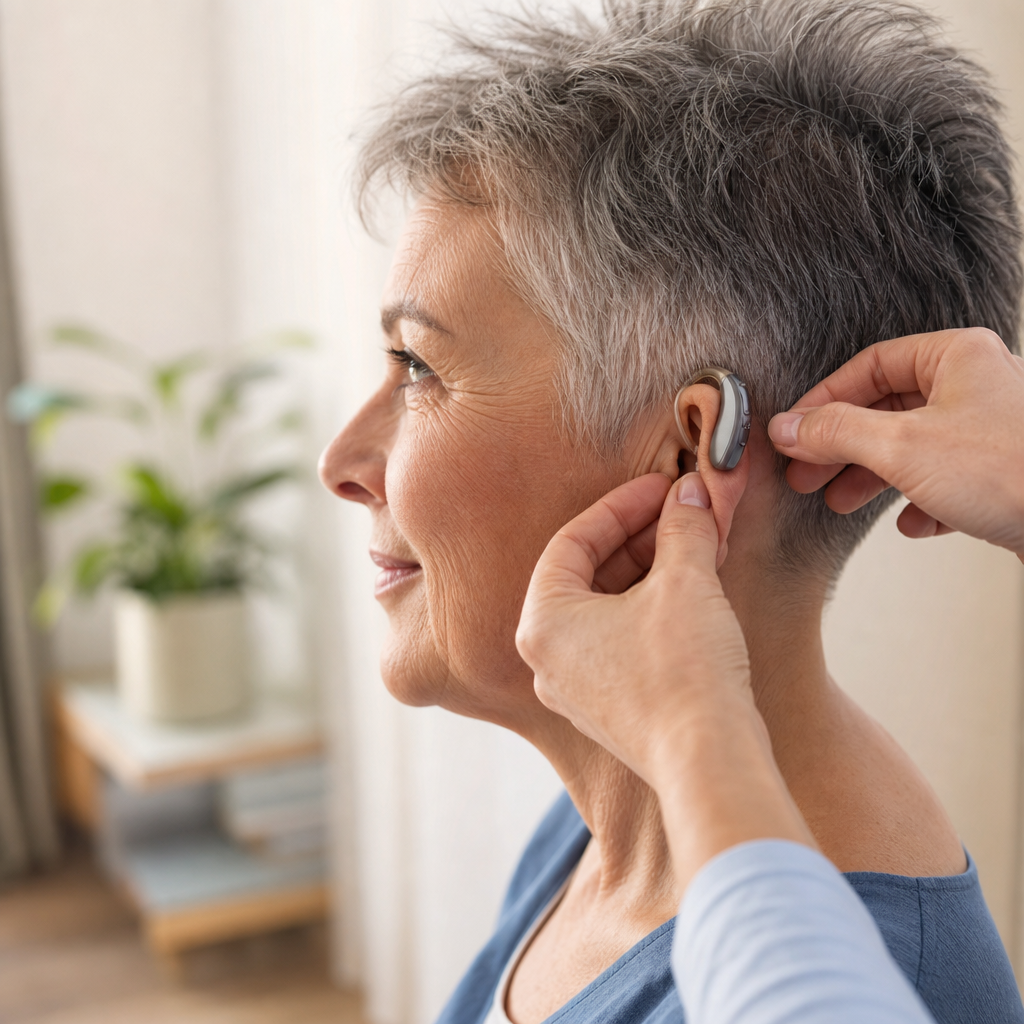
Over-the-counter hearing aids have changed how adults with hearing loss shop for help, compare devices, and start hearing better without the traditional clinic-first process. In practical terms, a hearing aid OTC product is a device regulated for adults age eighteen and older who believe they have mild to moderate hearing loss and want to buy hearing support directly from a store, brand website, or pharmacy. That change matters because untreated hearing loss is common, often gradual, and closely tied to communication strain, social withdrawal, listening fatigue, and reduced quality of life. I have worked with hearing technology buyers who delayed action for years because they assumed every hearing aid required multiple appointments, high prices, and complicated fittings. OTC hearing aids lower those barriers, but they also create new questions about safety, sound quality, self-fitting, returns, and whether a person should skip OTC and seek medical care instead. Understanding how the category works helps people avoid poor choices. It also helps families support a parent or partner who says the television is too quiet, speech sounds muffled, or restaurants have become exhausting. This guide explains what hearing aid OTC means, who it is for, how it compares with prescription hearing aids and personal sound amplifiers, what features matter, how pricing works, and how to choose responsibly. If you want a clear starting point before exploring more specific hearing aid articles, this hub gives you the foundation.
What OTC Hearing Aids Are and Who They Are For
An OTC hearing aid is a medical device intended to compensate for perceived mild to moderate hearing loss in adults. In the United States, the Food and Drug Administration established a specific category so eligible users can purchase certain hearing aids without a medical exam, prescription, or professional fitting before purchase. That does not mean every hearing problem should be handled alone. It means adults with common, uncomplicated hearing difficulty can access regulated devices more directly. Mild to moderate hearing loss usually shows up as trouble understanding soft speech, missing consonants, asking people to repeat themselves, increasing TV volume, or struggling in noisy settings more than in quiet one-on-one conversations.
The best OTC candidates are adults who can use a smartphone or simple controls, can follow setup instructions, and do not have warning signs that point to a medical problem. Those warning signs include sudden hearing loss, ear pain, drainage, dizziness, one-sided hearing loss, tinnitus in one ear, or a major difference between ears. In real buying situations, I advise people to pause if they are guessing about severity. A hearing screening through a clinic, health system, or a validated consumer hearing test can add useful context. OTC works best when the user’s hearing pattern is predictable enough for self-fitting and when expectations are realistic: better communication, less strain, and improved audibility, not perfect hearing in every room.
How OTC Hearing Aids Differ From Prescription Devices and Amplifiers
The most common confusion is between OTC hearing aids, prescription hearing aids, and PSAPs, or personal sound amplification products. OTC and prescription hearing aids are both regulated hearing aids. The difference is the sales pathway, fitting model, and intended user profile. Prescription hearing aids are typically sold through audiologists or hearing instrument specialists and are appropriate across a wider range of hearing losses, including more severe or medically complex cases. They often include in-person verification, custom programming, earmold options, and ongoing clinical support. OTC hearing aids are designed for adult self-selection and self-fitting within the mild to moderate range.
PSAPs are not hearing aids. They are consumer electronics intended for people without hearing impairment who want to amplify environmental sounds during activities such as birdwatching or lectures. Some PSAPs look similar to hearing aids, and some perform surprisingly well, but they are not marketed or regulated as devices to treat hearing loss. That distinction matters because hearing aids are expected to meet electroacoustic and labeling requirements tied to safety and intended use. If packaging avoids the term hearing aid and talks only about sound amplification, buyers should read carefully.
| Category | Primary user | How it is sold | Best use case |
|---|---|---|---|
| OTC hearing aid | Adults with perceived mild to moderate hearing loss | Direct to consumer, online or retail | Self-fitting help for common age-related hearing difficulty |
| Prescription hearing aid | Children, adults with any degree including complex loss | Through hearing care professional | Customized care, verification, severe loss, medical oversight |
| PSAP | People without diagnosed hearing loss | Consumer electronics retail | Situational amplification, not treatment of hearing loss |
Benefits, Limits, and Realistic Expectations
The biggest advantage of hearing aid OTC products is access. Prices are generally lower than bundled clinic models, and users can compare brands quickly. Many devices include app-based hearing checks, preset listening modes, directional microphones, rechargeable batteries, feedback management, and remote support. For a motivated buyer with straightforward hearing needs, that combination can shorten the time between noticing difficulty and getting help. Faster action matters because people who postpone treatment often adapt by withdrawing from conversation, bluffing through meetings, or avoiding noisy social settings. Better audibility can reduce effort and improve participation even when hearing is not restored to normal.
However, OTC is not a shortcut to ideal results for everyone. Self-fitting can be frustrating if dexterity is limited, ear canals are unusual, or smartphone setup feels overwhelming. Some lower-cost products oversimplify sound processing and perform poorly in noise, where many buyers most want improvement. Even good devices cannot fully eliminate the difficulty of separating speech from background sound, especially when hearing loss affects clarity rather than just volume. Open-fit designs may feel natural but can leak low-frequency sound. Closed domes may improve fullness but can increase occlusion, the plugged-up sensation users often dislike. Return policies and support quality matter almost as much as hardware.
Key Features to Evaluate Before You Buy
When comparing OTC hearing aids, focus on fit, sound processing, adjustability, and support rather than marketing adjectives. A self-fitting system with in-app hearing assessment can be useful if the software is intuitive and allows fine control over gain, balance, noise settings, and program selection. Look for directional microphones because they help emphasize speech coming from in front of the user. Noise reduction can improve comfort, though it does not magically restore speech understanding in every busy environment. Feedback suppression is essential to limit whistling. Rechargeable lithium-ion designs are convenient for daily use, while disposable battery models may still appeal to travelers or users who want quick swaps.
Streaming is another major differentiator. Some OTC devices connect directly to iPhone or selected Android phones for calls, media, and app control. Bluetooth Low Energy and Auracast readiness are becoming more relevant as public venue listening technology evolves, though support varies by brand. Physical design also affects success. Receiver-in-canal styles are discreet and comfortable for many adults, while in-ear options may appeal cosmetically but can be more sensitive to wax buildup and fit issues. Water and dust resistance ratings, such as IP68 on some products, provide useful durability signals but do not make a device indestructible. The practical checklist I use starts with five items: hearing-loss match, return window, support access, app quality, and all-in ownership cost.
Cost, Value, and What You Are Really Paying For
OTC hearing aid pricing typically ranges from a few hundred dollars to a few thousand dollars per pair, depending on brand, feature set, and service model. The headline price alone can mislead. Some lower-cost devices exclude charging accessories, replacement domes, telecare, or extended warranty coverage. More expensive models may include remote fine-tuning, professional onboarding, longer trial periods, and stronger app ecosystems. In clinic settings, I have seen buyers focus narrowly on sticker price and overlook whether they can actually get help after week one. That is a mistake because adaptation takes time. The first month often involves volume adjustments, dome changes, and habit building.
Value comes from sustained use and measurable communication benefit. If a moderately priced OTC device is comfortable, easy to maintain, and supported by responsive coaching, it can outperform a more advanced product that ends up in a drawer. Buyers should review trial periods, return shipping rules, restocking fees, warranty length, and replacement policies for lost or damaged devices. Health savings accounts and flexible spending accounts may help in some cases, but coverage rules vary. Traditional Medicare does not generally cover hearing aids, though some Medicare Advantage plans offer hearing benefits. State vocational programs, veterans’ benefits, and nonprofit assistance may also help eligible users. The smartest purchase is not the cheapest one; it is the one that matches hearing needs, user ability, and support requirements.
How to Choose, Set Up, and Know When to Seek Professional Help
A good buying process starts with honest self-assessment. If hearing problems are gradual, affect both ears similarly, and mainly involve speech understanding in groups or at a distance, OTC may be appropriate. Start by taking a reputable hearing screening, reading candid customer reviews, and confirming that the brand clearly states adult use for mild to moderate hearing loss. Once the devices arrive, fit matters immediately. Insert the domes correctly, test more than one size, and wear the aids in quiet spaces before tackling restaurants. The brain needs time to readapt to sounds that have been reduced for months or years. Short, consistent daily use usually works better than all-day wear from the first hour.
Track listening outcomes in specific environments: television, car rides, family dinners, meetings, and outdoor walks. If speech becomes clearer and listening effort drops, you are on the right path. If voices sound sharp, tinny, or echoey, settings may need adjustment rather than abandonment. If one ear consistently performs worse, or if you still struggle badly in quiet settings, get a full hearing evaluation. Professional care is also the right move if you have recurrent wax blockage, chronic tinnitus distress, manual dexterity problems, or hearing loss beyond the intended OTC range. OTC hearing aids are an important access point, not a replacement for medical judgment. Used wisely, they can be the easiest path into better hearing and a stronger bridge to more specialized care when needed.
Hearing aid OTC options have made hearing help more accessible, but the best results still come from informed decisions. The core points are straightforward. These devices are meant for adults with perceived mild to moderate hearing loss. They are regulated hearing aids, not generic amplifiers, and they can provide meaningful improvement when speech sounds dull, television volume keeps rising, or background noise makes conversation exhausting. Their strengths are convenience, lower entry cost, and faster access. Their limits are equally important: self-fitting is not ideal for every user, difficult listening situations remain difficult, and certain symptoms require medical or professional evaluation instead of direct purchase.
If you remember one rule, make it this: match the device to the person, not the advertisement. Check candidacy, compare features that affect daily use, study the return policy, and give yourself time to adapt. For many adults, that process leads to clearer conversations and less listening fatigue without the delay of a traditional appointment path. For others, an OTC trial reveals that more personalized care is needed, which is still useful because it moves the hearing journey forward. Use this hub as your starting point, then explore detailed guides on hearing tests, styles, brands, maintenance, and fitting support so you can choose the right next step with confidence today.
Frequently Asked Questions
What is an OTC hearing aid, and who is it designed for?
An over-the-counter, or OTC, hearing aid is a hearing device that adults can buy directly without first getting a medical exam, prescription, or fitting appointment through a hearing clinic. In the United States, these products are regulated specifically for adults age 18 and older who believe they have perceived mild to moderate hearing loss. The main goal of the OTC category is to make hearing support more accessible, more convenient, and often more affordable for people who may have delayed treatment because of cost, time, or uncertainty about where to begin.
OTC hearing aids are not intended for children, and they are not the right fit for every type of hearing problem. They are generally best for adults who notice signs such as needing the TV louder, asking people to repeat themselves, struggling to follow conversation in restaurants, or feeling that speech sounds less clear than it used to. These devices are designed to amplify and process sound in ways that can improve everyday communication, but they work best when the hearing difficulty falls within the mild to moderate range. If hearing loss is severe, sudden, one-sided, painful, or associated with dizziness, ear drainage, or ringing that recently changed, a medical evaluation is important before relying on any self-purchased device.
How are OTC hearing aids different from prescription hearing aids and personal sound amplifiers?
OTC hearing aids, prescription hearing aids, and personal sound amplification products are often confused, but they are not the same. OTC hearing aids are regulated medical devices intended to compensate for perceived mild to moderate hearing loss in adults. Prescription hearing aids are also regulated medical devices, but they are selected and programmed with the help of a licensed hearing professional and are commonly used for a wider range of hearing needs, including more complex or severe hearing loss. Personal sound amplifiers, often called PSAPs, are not hearing aids at all. They are consumer electronics meant to make environmental sounds louder for people without diagnosed hearing loss, such as for birdwatching or listening at a distance.
The biggest practical difference usually comes down to customization, support, and complexity of care. Prescription hearing aids are typically paired with professional hearing testing, custom programming, and follow-up adjustments based on your hearing profile. OTC hearing aids are meant to be self-selected and self-fit, often through onboard controls or a smartphone app that walks you through a hearing check and sound adjustments. For many adults with straightforward mild to moderate hearing loss, that direct-to-consumer process can be enough. But if your hearing situation is more complicated, if speech sounds distorted rather than simply soft, or if one ear seems much worse than the other, prescription care may offer a safer and more effective path.
How do I know if an OTC hearing aid is right for my hearing loss?
An OTC hearing aid may be a good option if you are an adult who has noticed gradual hearing difficulty and you suspect the problem is mild to moderate. Good candidates often hear that people are speaking, but struggle to understand certain words, especially in background noise. They may do reasonably well in quiet one-on-one conversations yet find meetings, restaurants, family gatherings, or TV dialogue much harder. If your hearing challenges have built up slowly over time and affect both ears in a fairly similar way, OTC devices can be a practical starting point.
There are also situations where OTC is not the best first step. You should seek medical or audiology evaluation if you have sudden hearing loss, hearing loss in only one ear, ear pain, drainage, bleeding, a feeling of pressure that does not go away, significant dizziness, a rapid change in tinnitus, or a long history of ear infections or ear surgery. These can point to issues that need diagnosis rather than simple amplification. It is also wise to get professional help if you buy an OTC device and still struggle after consistent use and careful adjustment. The key idea is that OTC hearing aids can be an excellent entry point for many adults, but they are not a substitute for medical care when warning signs are present.
What features should I look for when comparing OTC hearing aids?
When comparing OTC hearing aids, start with fit, comfort, and ease of use. Some models sit behind the ear with a thin wire leading to the ear canal, while others fit entirely or partially inside the ear. Comfort matters because even a high-performing device will not help if you do not want to wear it. Look at battery style as well. Rechargeable devices are convenient and reduce the need to handle tiny batteries, while disposable battery models may offer longer runtime away from a charger. Also pay attention to whether the controls are easy to manage directly on the device or through an app.
Sound processing features are another major factor. Many OTC hearing aids include noise reduction, feedback management to reduce whistling, directional microphones to help in conversations, and multiple listening settings for different environments. App-based self-fitting can be especially useful because it lets you fine-tune volume and clarity as your preferences change. Review the company’s return policy, trial period, warranty, and access to customer support before buying. Since hearing aid success often depends on adjustment over time, strong support can matter almost as much as the hardware itself. A well-designed OTC device should not just make sound louder; it should help speech feel clearer, more comfortable, and easier to follow in real-world listening situations.
What should I expect after buying an OTC hearing aid, and how can I get the best results?
It is important to expect an adjustment period. Hearing aids do not simply restore hearing to the way it once was, and the brain often needs time to get used to amplified sound again. At first, everyday noises such as footsteps, dishes, paper, running water, or your own voice may seem unusually noticeable. That does not necessarily mean the device is wrong. In many cases, it means you are reintroducing your brain to sounds it has not been hearing clearly for a while. Most users benefit from starting in quiet settings, wearing the device consistently for increasing periods each day, and making gradual adjustments rather than expecting instant perfection.
To get the best results, follow the setup instructions carefully, use any hearing test or self-fitting app the brand provides, and make notes about where speech is still hard to understand. Try the hearing aids in several common situations, such as at home, during phone calls, while watching TV, and in restaurants or group conversations. Clean the devices regularly, charge them as directed, and learn how to position them correctly in or on the ear. If the product includes remote support, use it. Good hearing aid outcomes often come from small refinements over time. And if the device still does not help enough, take advantage of the trial period or return window. OTC hearing aids can be a very effective first step toward better hearing, but the best outcome comes from matching the device to your needs, using it consistently, and seeking professional guidance if your results fall short.