
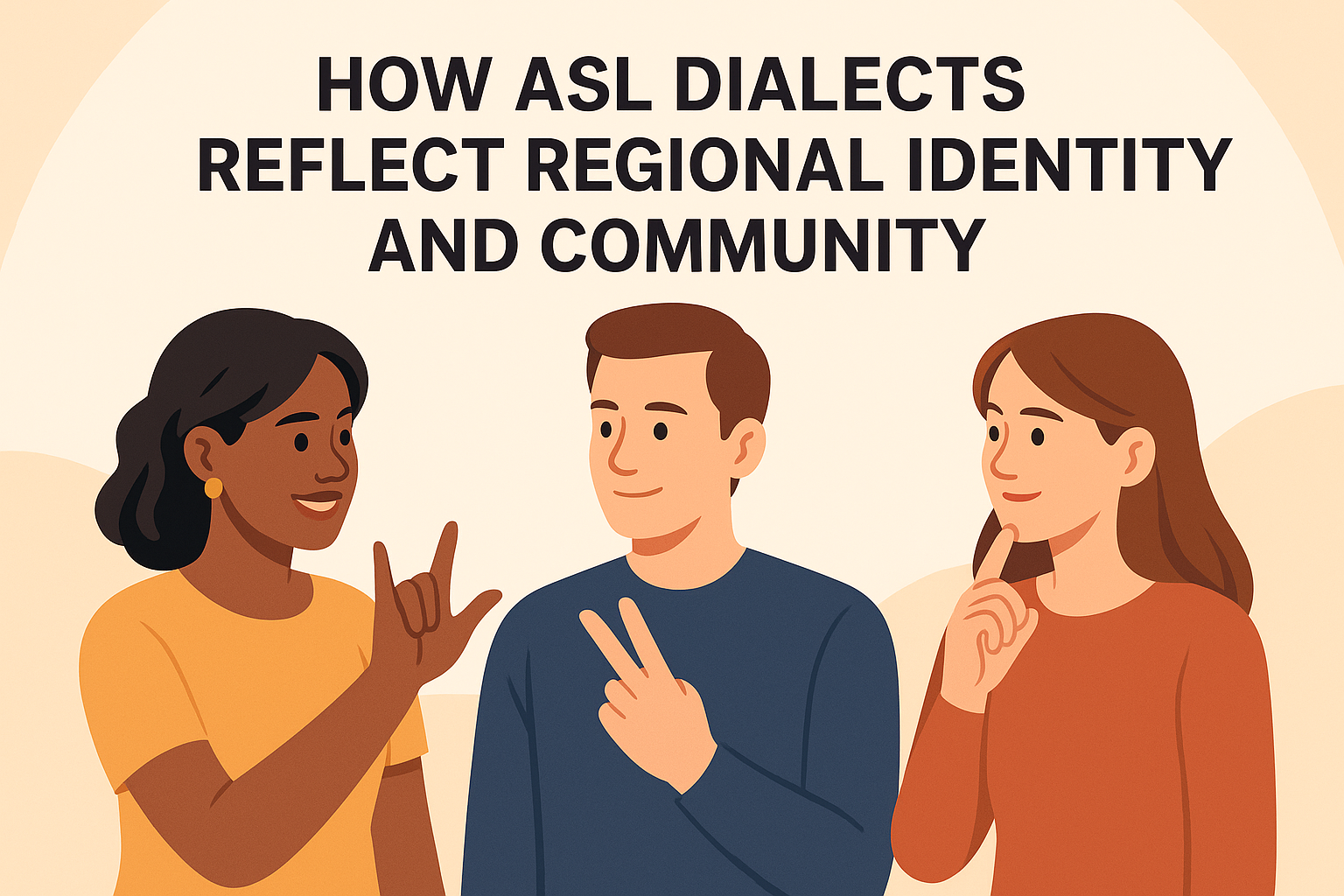
Introduction to ASL Dialects
American Sign Language (ASL) is a complex, fully-formed language with its own syntax, grammar, and cultural significance. While many perceive ASL as a unified mode of communication, it is crucial to understand that it features a variety of dialects, reflecting the diverse cultural and regional identities of its users. Just as spoken languages vary from one region to another, sign languages also exhibit noticeable differences that underscore local culture and community.
Understanding ASL dialects involves recognizing how these variations manifest in signs, facial expressions, and body movements. Dialects may arise due to historical factors, such as migration patterns and educational influences, or social elements, like family traditions and community engagement. This topic matters because acknowledging the diversity within ASL highlights the richness of Deaf culture and promotes inclusivity among its practitioners and the broader society.
The study of ASL dialects offers insights into how different communities connect, shape their identities, and maintain their cultural heritage. For educators, interpreters, and advocates within the Deaf community, recognizing dialectical variations is essential for effective communication and advocacy. It emphasizes the necessity to preserve linguistic diversity and foster cultural pride, which in turn strengthens community bonds and enriches societal understanding of Deaf culture.
The Influence of Regional Identity on ASL Dialects
Regional identity plays a significant role in the development of ASL dialects. Communities across the United States have distinct cultural attributes, which are reflected in the way ASL is used. These dialects are shaped by the local culture, historical context, and the socioeconomic background of the area.
For example, the Southern United States has a distinct dialect characterized by slower signing speeds and more pronounced facial expressions. This variation parallels the slower pace and expressive communication often associated with Southern spoken languages. It’s theorized that such traits evolve from the region’s historical emphasis on storytelling and oral traditions.
On a broader scale, examining regional differences within ASL allows one to observe how localized expressions and customs influence language development. In essence, ASL dialects encapsulate the unique identity of a region, offering a window into its cultural ethos.
Historical Evolution of ASL Dialects
Historically, the evolution of ASL dialects can be traced back to various educational policies and institutions that served the Deaf community. During the 19th and 20th centuries, schools for the Deaf across the United States fostered the development of localized dialects. These schools acted as hubs where Deaf individuals could share experiences and pass on linguistic traditions.
An illustrative example is Gallaudet University, a renowned institution for Deaf education in Washington D.C. The university has been instrumental in the preservation and dissemination of ASL and its dialects. Attendees often bring distinct regional signs from their home communities, creating a melting pot of dialect influences. This environment facilitates the exchange and adaptation of different ASL dialects, leading to a dynamic linguistic landscape.
| Region | Characteristic | Example Sign |
|---|---|---|
| New England | Sharp, rapid movements | “Snow” is signed quickly |
| Midwest | Less facial expression | “Thank you” with minimal affect |
| California | Fluid, flowing gestures | “Sun” with a smoother motion |
Community and Social Networks in ASL Dialects
Social networks and community interactions significantly influence ASL dialect formation. Within Deaf communities, social gatherings, clubs, and events serve as platforms where dialects are practiced and expanded. These interactions encourage the development of shared linguistic features, fostering a sense of belonging among participants.
Consider the impact of Deaf clubs in major cities such as Chicago or New York. These clubs provide a social context where members communicate, share experiences, and perpetuate regional dialects. They are pivotal in strengthening the social fabric of the Deaf community, as members exchange unique signs, phrases, and expressions representative of their local culture.
Moreover, regional events such as Deaf expos or conventions offer broader opportunities for individuals to connect with others from different areas, leading to a rich exchange of dialectical nuances. These interactions are essential for reinforcing community ties and understanding the evolving dynamics of ASL as a living language.
Educational Institutions and Their Role
Educational institutions play a proactive role in shaping ASL dialects. Schools for the Deaf often become breeding grounds for regional sign language variations. They offer an immersive environment where students and educators use ASL as the primary mode of communication, allowing for the natural development of dialectical differences.
For instance, the Louisiana School for the Deaf has historically influenced the development of Cajun-influenced ASL dialects. This dialect exemplifies how regional culture, such as the Cajun French-speaking community, can impact ASL sign formation and usage.
Additionally, teacher-student interactions in Deaf schools contribute to the propagation of distinct ASL expressions, reflecting local cultural preferences. This plays a crucial role in preserving linguistic diversity within the Deaf community, as educators pass down regional signs to successive generations.
The Impact of Technological Advancement on ASL Dialects
Technological advancements have both challenged and enriched ASL dialects. Video communication platforms, social media, and online resources enable Deaf individuals to connect across vast geographical distances, facilitating a cross-pollination of regional dialects.
Platforms like Zoom and YouTube have made it easier for the Deaf community to share their experiences and introduce regional sign language variations to a broader audience. This increased access to diverse linguistic content encourages greater flexibility in ASL use and adapts it to modern communication needs.
However, an emerging concern is the potential homogenization of ASL dialects, as individuals may lean towards more standardized forms seen in widespread media. Despite this, the technological era has also strengthened ASL by broadening its reach and allowing users to celebrate the richness of its regional differences.
Conclusion: Embracing and Celebrating ASL Dialects
The exploration of ASL dialects reveals a tapestry of linguistic diversity shaped by regional identity and community. Learning about these dialects enriches our understanding of the Deaf community’s cultural heritage and emphasizes the importance of preserving these dialectic nuances.
Recognizing and respecting ASL dialects not only improves communication but also nurtures empathy and inclusivity within and beyond the Deaf community. For advocates, educators, and learners, embracing this diversity leads to a more comprehensive awareness of linguistic and cultural identities.
The next step is simple: continue supporting efforts to document, study, and share ASL dialects, ensuring their survival for future generations. By doing so, we acknowledge the unique voices within the Deaf community and celebrate the ways in which language reflects our shared human experience.
Frequently Asked Questions
1. What are ASL dialects and how do they develop?
ASL dialects are variations in American Sign Language usage that occur in different geographic regions and communities. These dialects develop due to several factors, including geographical separation, cultural influences, and varying educational practices. Just as people in different parts of the United States may speak English with distinct accents or use unique phrases, users of ASL may sign in ways that reflect their local culture and experiences.
For instance, the vocabulary used in ASL may differ between regions. This can be due to historical developments or local cultural references that become embedded in the language over time. Additionally, with Deaf communities being close-knit, the evolution of specific signs can rapidly spread within a region, cementing the dialect’s particularities.
Moreover, regional dialects can arise due to variations in ASL teaching methods and curricula. Different schools for the Deaf may emphasize certain signs or expressions over others, influenced by the instructors’ own regional backgrounds. These academic variances contribute to the development and maintenance of ASL dialects across the country.
2. How do ASL dialects reflect regional identity?
ASL dialects are deeply intertwined with regional identity because they often contain signs or expressions unique to a particular area. These local variations can signify identity and belonging to specific communities. Much like wearing sports team gear or using a local slang term, employing regional ASL signs signals a connection to that community and its history.
Regional dialects may incorporate local cultural references, which can include specific signs for regional foods, landmarks, or historical events. For instance, a Deaf person from the south might have specific signs related to Southern cuisine or occurrences like hurricanes, while someone from the northeast might utilize signs reflective of experiences with snowy winters or well-known cities like New York.
Additionally, the use of a regional dialect can create a sense of community and belonging among ASL users. Engaging in a dialect that incorporates unique signs fosters group identity and camaraderie. It’s an affirmation of shared values and experiences unique to that region, extending beyond just communication.
3. Can dialectal differences in ASL create communication barriers within the Deaf community?
While ASL dialects showcase regional diversity, they can present occasional communication challenges within the broader Deaf community. Just like in spoken languages, substantial differences in signs or expressions might require clarification or adaptation when ASL users from different regions interact.
These potential barriers, however, are usually not insurmountable. The Deaf community is known for its adaptability and strong focus on visual communication. If confusion arises from a dialectal difference, individuals typically employ fingerspelling or description to bridge the gap and ensure understanding.
Moreover, many Deaf individuals are aware of the major dialectal variations and can adjust their signing to accommodate others. This adaptability is representative of the community’s resilience and flexibility. Conversations about different signs can also provide an opportunity for cultural exchange within the community, enhancing mutual understanding and appreciation for diverse expressions within ASL.
4. Are there specific examples of ASL dialects in the United States?
Yes, several examples of ASL dialects exist in the United States, showcasing the rich tapestry of regional variations. For instance, the Southern dialect of ASL is known for its distinct signing style and unique expressions. This includes slower and more drawn-out signs, likely influenced by the Southern cultural stereotype of a leisurely pace to life.
In the Boston area, you might encounter signs for local sports teams or iconic locations specific to New England culture. Similarly, the Midwest has its own set of dialectical differences and even some specific signs that reflect the agrarian lifestyle and Midwestern cultural nuances.
Additionally, urban centers like New York City often have their own dialects influenced by the city’s diverse population and unique environmental factors. The specific experiences and cultural melting pot of a place like New York City can lead to specialized signs that may not be recognized outside the area.
These examples underscore how ASL dialects serve as living manifestations of local culture, history, and daily life across different regions in the U.S.
5. How do educational institutions impact ASL dialects?
Educational institutions play a significant role in the development and perpetuation of ASL dialects. Schools for the Deaf traditionally serve as cultural hubs where language and cultural norms are passed down through generations. A particular school’s curriculum, teachers, and student body can heavily influence a regional dialect.
For instance, if an institution employs teachers from a certain region, their signing style may emphasize specific regional signs. Similarly, if a school incorporates local historical events, regional literature, or cultural studies into their coursework, these elements can shape the dialects that students learn and use.
Moreover, residential schools for the Deaf foster environments where students from various localities might converge, share, and blend their dialects. This exchange not only allows for the survival of more regional signs but also encourages an evolving dialect that might incorporate elements from multiple areas, ensuring that ASL dialects remain vibrant and dynamic.
Thus, the influence of educational institutions on ASL dialects highlights the significance of learning environments in shaping linguistic identities within the Deaf community. They are vital in nurturing both the consistency and evolution of dialects across regions.