

Deaf education is not just about equipping students with the skills necessary to navigate the world; it’s about embracing and celebrating the unique cultural and artistic expressions that come with it. American Sign Language (ASL) and visual arts are two mediums that have an intrinsic connection, both emphasizing the importance of visual-spatial skills and creativity. ASL, a rich and complex language, uses hand shapes, facial expressions, and body movements to convey meaning, while visual arts encompass a broad range of artistic practices that express ideas and emotions visually. By exploring these connections, we can gain a deeper appreciation for Deaf culture and the ways in which art can serve as a powerful tool for communication and self-expression.
In the realm of Deaf education, fostering an appreciation for art and ASL can have profound impacts on students. It allows them to develop strong visual-spatial skills, enhances their ability to communicate complex ideas, and opens up new avenues for creative expression. Art can also serve as a bridge between the Deaf and hearing communities, promoting greater understanding and collaboration. Moreover, it offers a platform for the Deaf community to share their stories, challenges, and triumphs, thus fostering a sense of pride and identity.
In this article, we will delve into the intricate connections between ASL and visual arts, explore the historical and cultural contexts that have shaped their development, and highlight the ways in which these mediums can be used to enrich Deaf education and awareness. We’ll also look at inspiring examples of Deaf artists and educators who have made significant contributions to the arts and discuss practical strategies for incorporating art and ASL into educational settings. Through this exploration, we aim to enhance our understanding of the powerful interplay between language and art in Deaf culture, ultimately encouraging a more inclusive and appreciative society.
Historical and Cultural Contexts
The connection between ASL and visual arts can be traced back to the roots of Deaf culture. Historically, Deaf individuals have faced numerous challenges, including limited access to education and social integration. Despite these obstacles, the Deaf community has developed a rich cultural heritage that is deeply intertwined with artistic expression. One notable figure in this history is Laurent Clerc, a Deaf educator who played a crucial role in establishing the first school for the Deaf in the United States in the early 19th century. His contributions not only laid the foundation for Deaf education but also emphasized the importance of visual communication.
In many Deaf cultures around the world, storytelling through sign language is a cherished tradition. These stories, often passed down through generations, are not only a means of preserving history but also a form of artistic expression. Visual storytelling in sign language can be likened to a theatrical performance, with the signer using a combination of signs, facial expressions, and body movements to convey characters, emotions, and actions. This form of narrative art has a significant impact on the cultural identity and cohesion of the Deaf community.
Moreover, the visual nature of ASL aligns seamlessly with various forms of visual arts, such as painting, sculpture, and digital media. Artists from the Deaf community often draw inspiration from their experiences and perspectives, creating works that reflect their unique viewpoints and challenges. For instance, renowned Deaf artist Chuck Baird is celebrated for his vibrant paintings that incorporate ASL elements, seamlessly blending language and art. His work has not only elevated the visibility of Deaf culture but also challenged conventional perceptions of art and communication.
The Impact on Deaf Education
Integrating ASL and visual arts into educational curricula offers numerous benefits for Deaf students. From an educational perspective, art and ASL can help develop essential cognitive and motor skills. The visual-spatial nature of both mediums encourages students to think creatively and critically, enhancing their problem-solving abilities. This connection is particularly beneficial in subjects such as mathematics and science, where visual skills can aid in understanding complex concepts and spatial relationships.
Furthermore, incorporating art into Deaf education can improve language acquisition and literacy. By engaging with visual arts, students can expand their vocabulary and comprehension, as they often need to describe their artistic processes and the narratives behind their creations. This engagement with language in a visual context reinforces their ASL skills, making learning more interactive and enjoyable.
Art also provides a therapeutic outlet for self-expression and emotional regulation. Deaf students, like anyone, face various emotional challenges and stressors. Art therapy can be a powerful tool for helping them process their emotions, build resilience, and develop a positive self-image. In classrooms, activities such as drawing, painting, and sculpture can offer students a safe space to express their feelings and explore their identities.
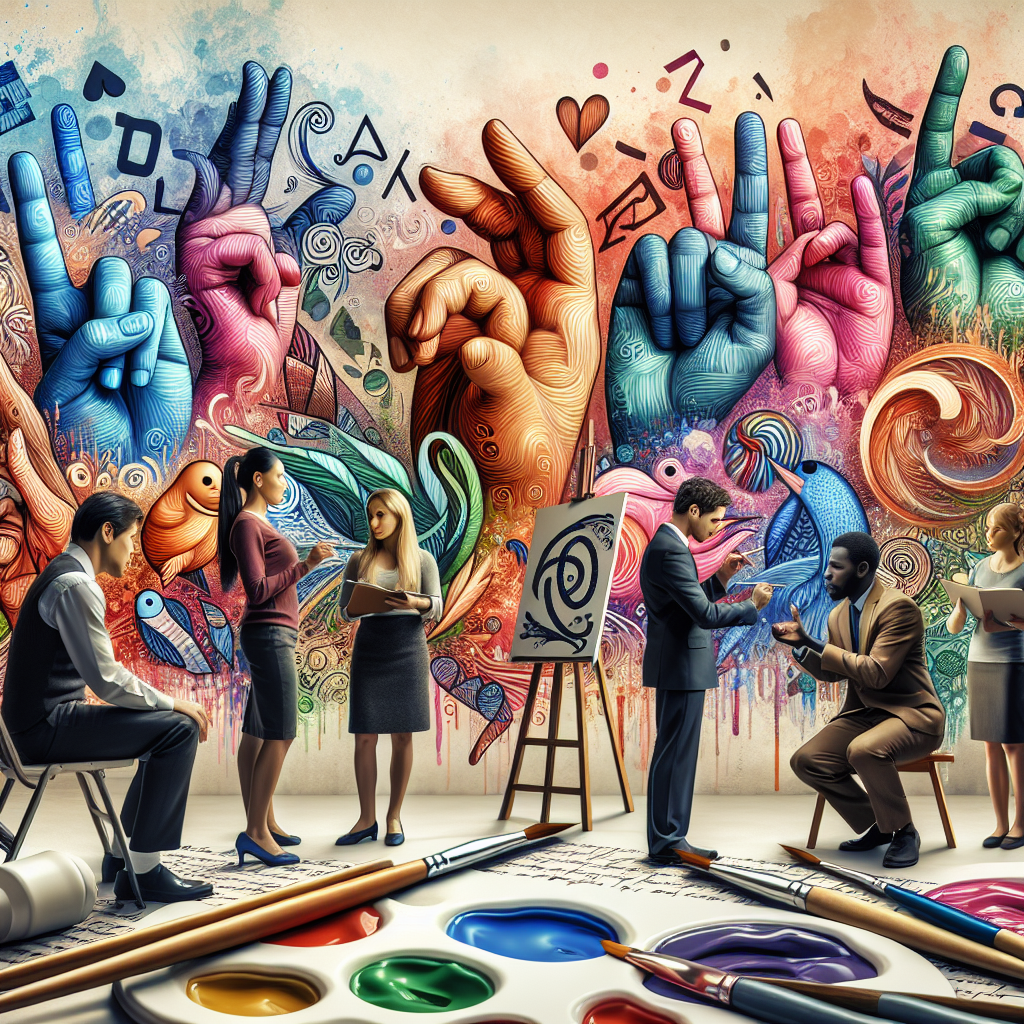
Practical Strategies for Incorporating Art and ASL
To effectively integrate ASL and visual arts into Deaf education, educators can adopt several strategies that cater to the unique needs and strengths of their students. Here are some practical approaches:
- Art-Integrated Curriculum: Design curriculum units that combine art projects with ASL language lessons. For example, students can create visual art pieces that depict ASL vocabulary words, helping to reinforce their understanding through creative activities.
- Collaborative Projects: Encourage collaboration between Deaf and hearing students through joint art projects. These collaborations can foster mutual understanding and appreciation, allowing students to learn from each other’s perspectives and skills.
- Storytelling Through Art: Use ASL storytelling as an integral part of art classes. Students can create visual representations of traditional Deaf stories or their own narratives, promoting both language and artistic skills.
- Guest Artists and Workshops: Invite Deaf artists to conduct workshops and share their experiences with students. These interactions can inspire students and provide role models who demonstrate the possibilities of combining ASL and art.
- Accessible Resources: Ensure that art and ASL resources are accessible to all students. This includes providing materials in formats that accommodate various needs, such as tactile art supplies for visually impaired students.
Inspiring Examples of Deaf Artists and Educators
The world is replete with inspiring Deaf artists and educators who have made significant contributions to both the arts and Deaf culture. Their work not only showcases their talent but also serves as a testament to the importance of embracing visual-spatial communication and artistic expression within the Deaf community. Here are a few notable examples:
Chuck Baird
Chuck Baird was a pioneering Deaf artist whose work seamlessly blended ASL and visual art. His vibrant paintings often incorporated elements of sign language, creating a unique fusion that celebrated Deaf culture. Baird’s art continues to inspire and elevate the visibility of the Deaf community in the broader artistic landscape.
Nancy Rourke
Nancy Rourke is another influential Deaf artist known for her bold and expressive paintings. Her work often addresses themes related to Deaf identity, social justice, and empowerment. Rourke’s art serves as a powerful form of advocacy, challenging societal norms and promoting greater understanding of Deaf experiences.
Ann Silver
Ann Silver is a celebrated Deaf artist and designer whose work spans various mediums, including painting, graphic design, and sculpture. Her art often explores themes of Deaf culture and social issues, offering thought-provoking commentary on the intersection of language and identity. Silver’s contributions have been instrumental in raising awareness and appreciation for Deaf art.
Educators in Deaf Studies
Many educators in the field of Deaf studies are also accomplished artists who use their talents to enrich their teaching. These educators create inclusive learning environments that celebrate Deaf culture and promote visual-spatial learning. By integrating art into their curricula, they provide students with valuable tools for communication, self-expression, and personal growth.
Conclusion
As we’ve explored throughout this article, the connections between ASL and visual arts are profound and multifaceted. Both mediums emphasize the importance of visual-spatial skills, creativity, and self-expression, making them invaluable components of Deaf education. By integrating art and ASL into educational settings, we can create more inclusive and engaging learning experiences that foster a deeper appreciation for Deaf culture and the unique perspectives it brings.
The historical and cultural contexts of ASL and visual arts highlight the resilience and creativity of the Deaf community. From traditional visual storytelling to contemporary art movements, Deaf individuals have used these mediums to preserve their heritage, share their stories, and challenge societal norms. Inspiring artists and educators like Chuck Baird, Nancy Rourke, and Ann Silver continue to elevate the visibility of Deaf culture and demonstrate the powerful interplay between language and art.
Practical strategies for incorporating art and ASL into education can have far-reaching impacts on students’ cognitive, linguistic, and emotional development. By fostering an appreciation for visual-spatial communication and artistic expression, educators can empower Deaf students to engage with the world in meaningful and creative ways. Collaborative projects, storytelling through art, and accessible resources are just a few of the approaches that can enhance the learning experiences of Deaf students.
Ultimately, celebrating the connections between ASL and visual arts is about more than just education; it’s about recognizing and valuing the diverse ways in which people communicate and express themselves. It’s about building a more inclusive society that appreciates the richness of Deaf culture and the contributions of Deaf individuals to the arts and beyond. By continuing to explore and celebrate these connections, we can promote greater cultural awareness and appreciation, fostering a world where everyone can communicate and create freely.